
 English
 Русский
Dynamic mobile proxies are mobile proxies without a fixed IP: the channel works with a cellular carrier’s address pool, and the external address is replaced by another one from time to time. The change happens on a timer, by link or with every new connection. In 2026 most 4G/LTE mobile proxies work this way, all LTESpace plans included, so the real question is when a dynamic address is convenient and when a task needs a permanent one.
What a “dynamic IP” means
Every internet provider hands out addresses in one of two ways:
- dynamically — the address is issued for the duration of a connection and may change after reconnecting;
- statically — the address is assigned to the customer and stays the same for as long as the contract lasts.
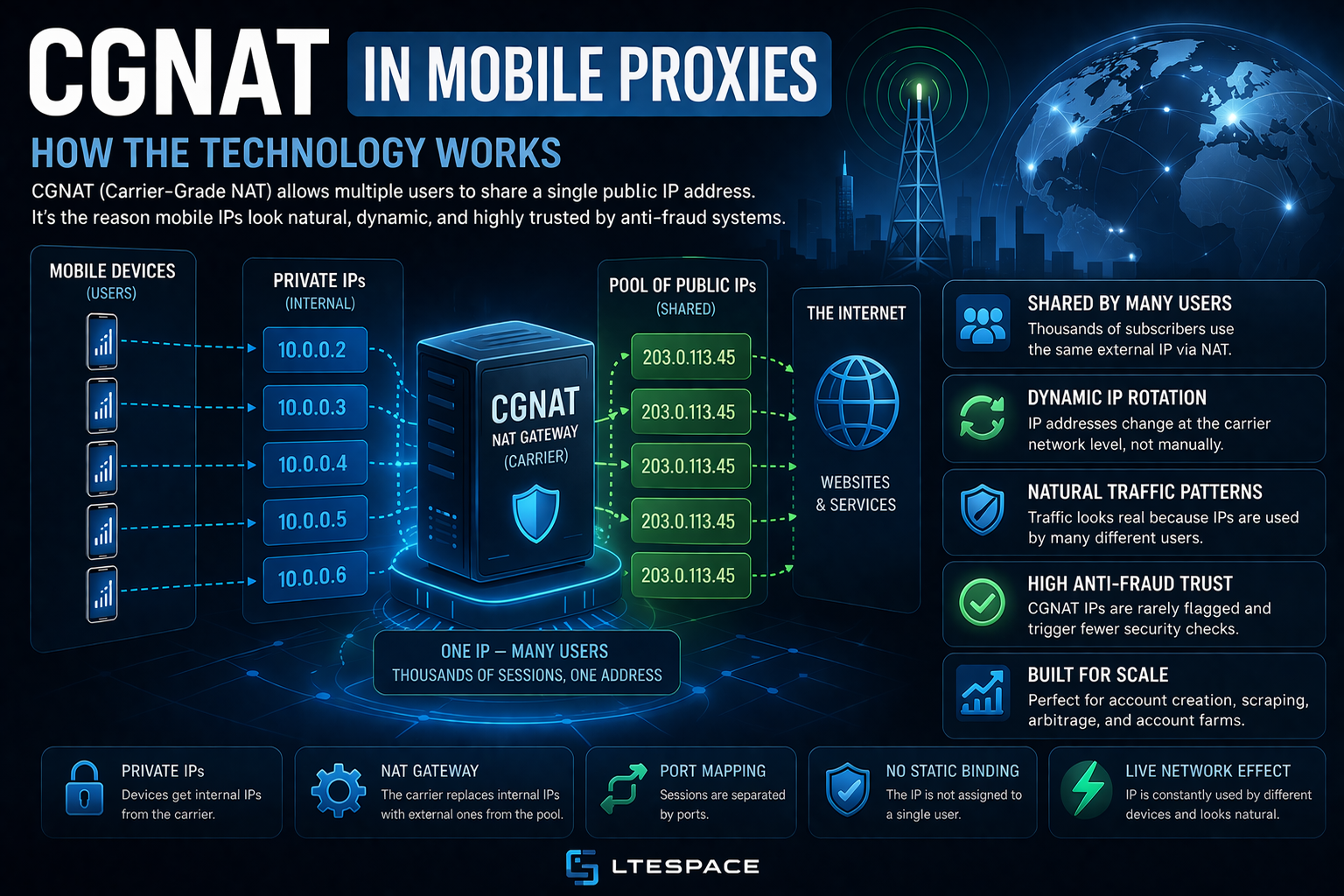
Cellular carriers almost always use the first way: a subscriber gets an external address from a shared pool, and a different one the next time they go online. Many devices use that address at the same time, as explained in CGNAT in mobile proxies. A mobile proxy inherits this network behaviour, which is why it is called dynamic.
How dynamic mobile proxies work
A proxy channel is a modem with a SIM card that keeps a connection to the carrier. When it is time to change the address, the modem reconnects to the network and receives a new IP from the pool; one channel’s pool holds 2,000 addresses or more. LTESpace has three change modes:
- on a timer — every 2 or 5 minutes on a shared channel, every 2 minutes on multiregion, and at a chosen interval from 1 to 60 minutes on a private channel;
- by link — on a private channel the address changes at the moment the client needs it;
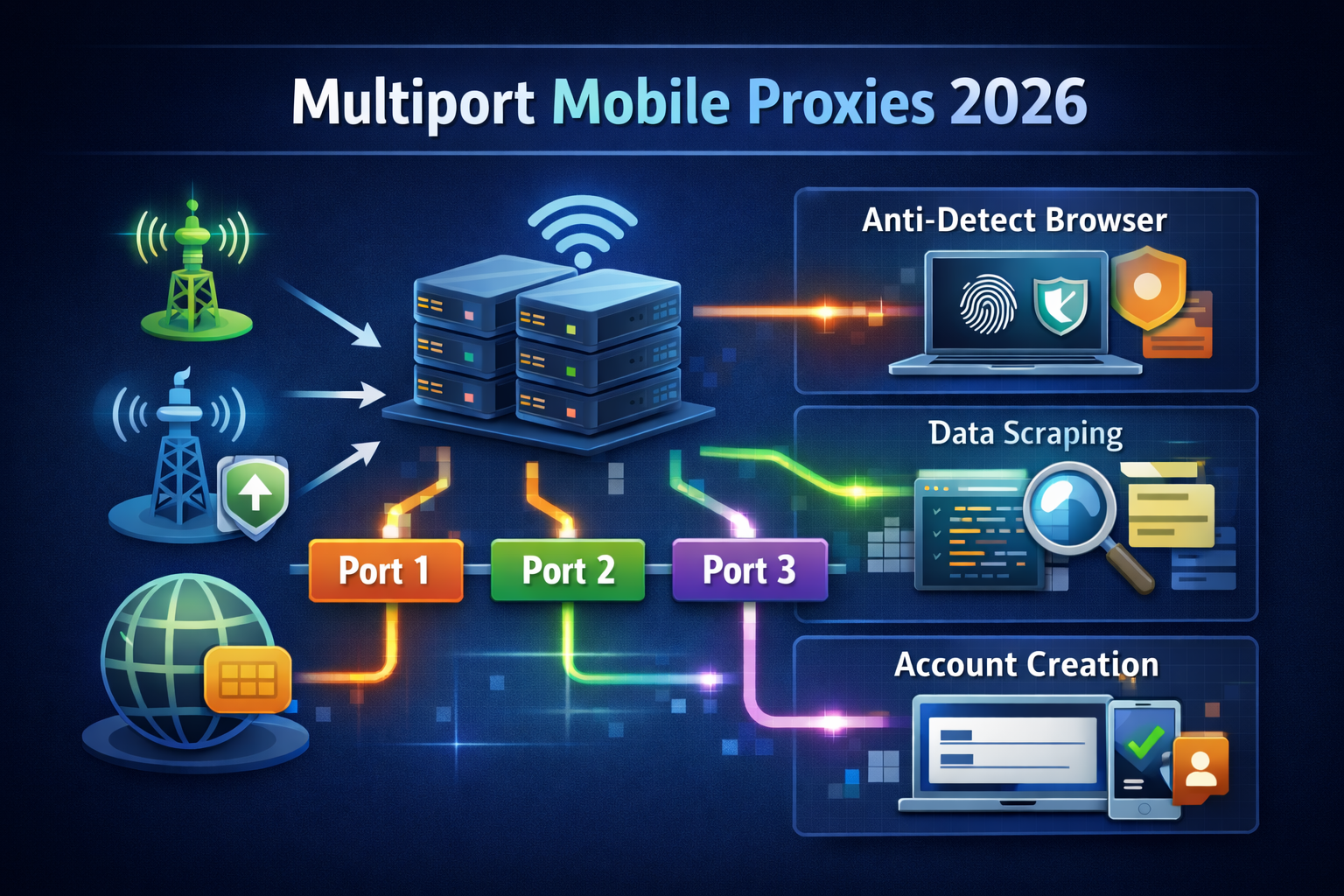
- per connection — with multiport, which is built for programs rather than browser work.
How to pick a mode for a task is covered in the guide mobile proxies with rotation. How the channel itself is built — in what is a mobile proxy server and how does it work.
What static proxies are
A static proxy is one whose address is assigned to the client for the whole rental period. Usually it is a datacenter address or a home provider’s address set aside for proxy use.
Static mobile proxies in the strict sense hardly exist: a carrier does not tie an external address to a SIM card. What is sold under that name is a mobile channel with automatic IP changes switched off. The closest option at LTESpace is a private channel: automatic changes can be left off, and the address then changes only by link. It is still a carrier address, though: if the modem reconnects to the network, the carrier may issue a different one.
Dynamic and static proxies compared
- Address stability — a static proxy keeps one IP for the whole term, a dynamic one changes the address by the rule you choose;
- Origin — a dynamic mobile address belongs to a carrier, a static one most often to a hosting company;
- Blocks — if a platform restricts a dynamic address, the next one is clean, while a blocked static address has to be replaced entirely;
- Sessions — on a static address a login lasts as long as you like, on a dynamic one the change has to be timed around the work or the session breaks;
- IP allowlists — a service that only lets in a pre-registered address works with a static IP and not with a dynamic one.
How platforms judge an address itself is covered in IP trust score and account registration.
When you need dynamic mobile proxies
- monitoring search results and ads, where every batch of requests goes out from a new address, see mobile proxies for checking Google results by region;
- collecting data from websites that limit the number of requests per IP, more in proxies for web scraping;
- account registration, where every next account should get its own address, see account registration with mobile proxies;
- spreading a heavy load across many addresses of one carrier.
When you need a permanent address
- a service or API only accepts connections from a pre-set list of addresses;
- remote access to your own server protected by an IP filter;
- long work in one account, where an address change mid-session triggers another check.
The first two cases need a truly static address, for example a datacenter one. For the third, a private mobile channel where the IP changes only on the client’s command is enough.
How to keep one address on a dynamic channel
- Take a private mobile proxy: the channel is not shared with other clients.
- Leave automatic changes off and change the IP by link only between sessions.
- Give every antidetect browser profile its own channel so that profiles do not share an address.
This way work in an account runs from one mobile address, and a new IP appears exactly when it is needed.
How much dynamic mobile proxies cost
All LTESpace channels are dynamic. Prices for Russia for 30 days, September 2026:
- Shared and Multiport — ~$8 each;
- Multiregion — ~$11;
- Shared without waiting — ~$16;
- Private — ~$39.
The minimum term is one day, a shared channel costs ~$1.6 per day, and traffic is unlimited. You can compare channels and buy dynamic mobile proxies in the LTESpace plans.
Summary
Dynamic mobile proxies take addresses from a carrier’s pool and change them on a timer, by link or per connection, while static proxies keep one address for the whole term. A dynamic IP helps wherever fresh addresses and load distribution matter. A permanent address is needed by services with an IP allowlist, and for long account sessions a private mobile channel that changes the IP only by link is enough.