
 English
 Русский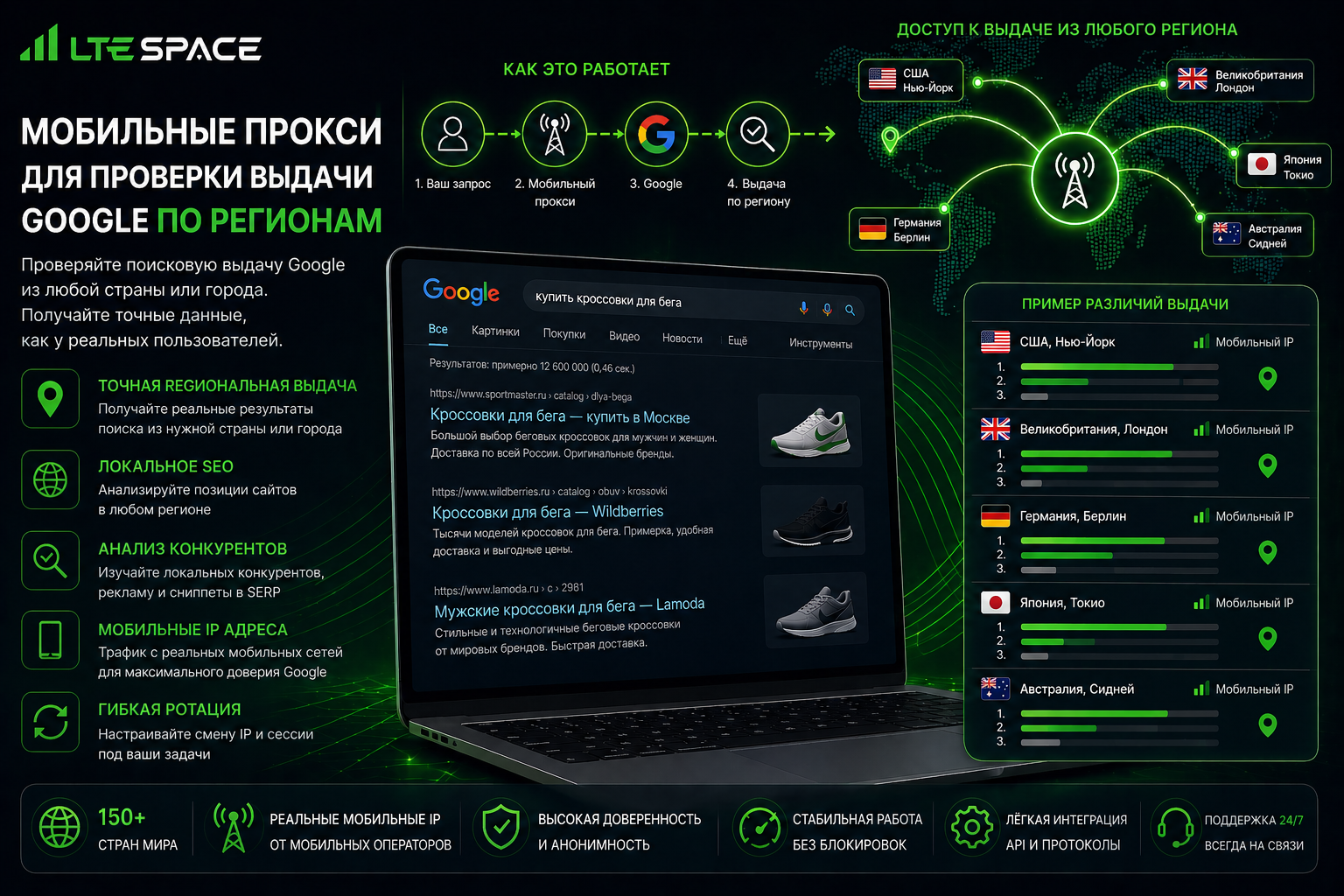
Mobile proxies for checking Google results by region
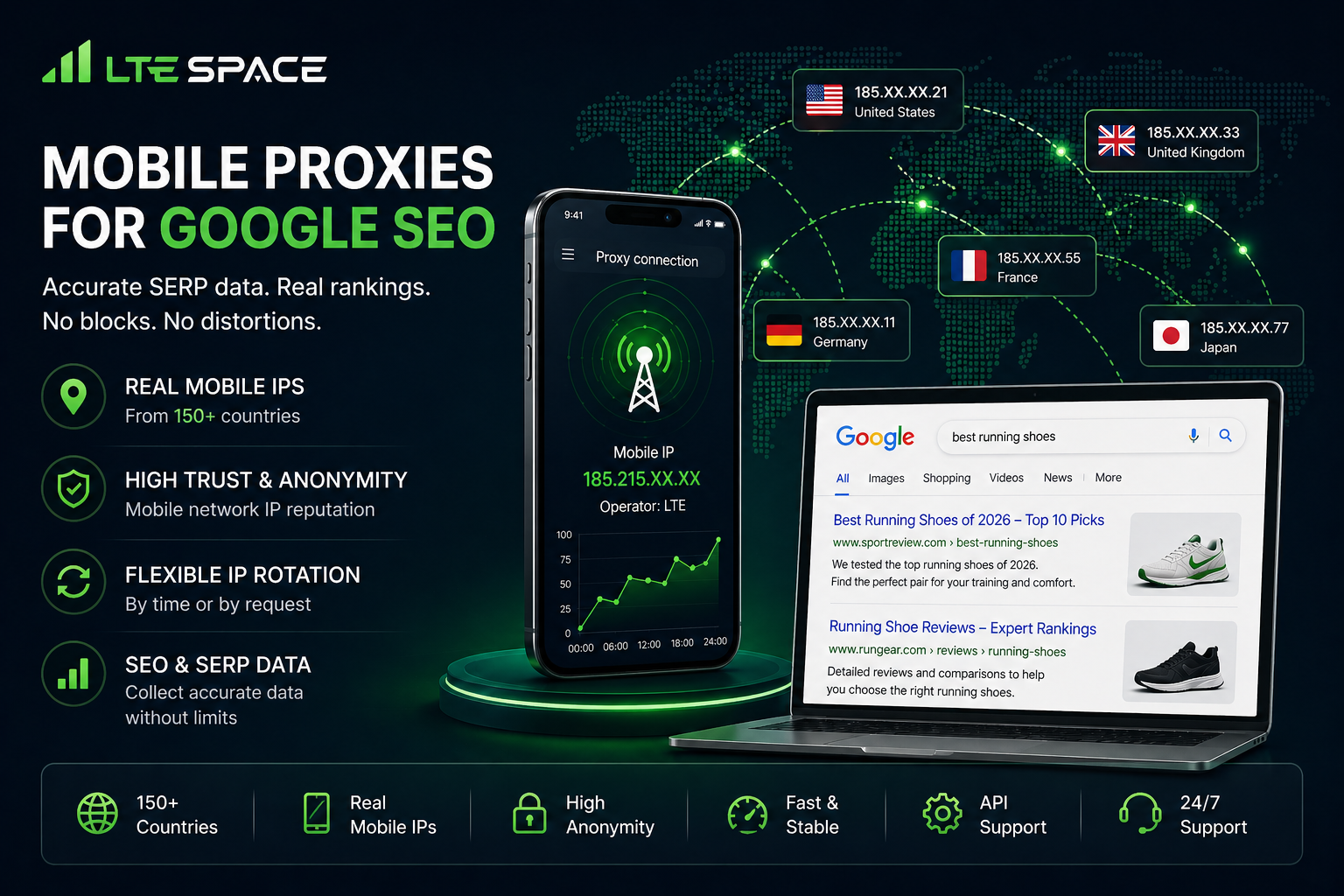
Mobile proxies for checking Google results by region are used to analyze search results based on real user geolocation. In modern Google SEO, search results depend on country, city, language, device, and network environment, which makes accurate regional analysis impossible without proper IP matching.
For SEO tasks, this is critical. If you check rankings from the wrong location or through datacenter IPs, the results will not reflect what real users see.
Problems of checking Google results without regional proxies
Google search results vary significantly depending on location. Without proper setup, collected data becomes unreliable.
Common issues include:
- different SERP results across countries and cities;
- local packs and business listings;
- language-based variations;
- mobile vs desktop differences;
- distorted results when using shared IPs;
- limited access to local search data.
Datacenter proxies often fail to simulate real user locations, leading to inaccurate results.
For comparison, see difference between mobile and datacenter proxies
How mobile proxies for checking Google results by region work
Mobile proxies for checking Google results by region route requests through IP addresses of mobile network operators in specific locations.
Google evaluates:
- IP geolocation;
- network type;
- browser language;
- timezone;
- behavioral signals;
- search history patterns.
When all parameters match the target region, the results closely reflect real user experience. If not, the SERP may differ.
Mobile networks often rely on CGNAT, where multiple users share one IP. This increases trust signals but requires proper load control.
More details: what is CGNAT in mobile proxies
Where mobile proxies are used for regional Google analysis
Mobile proxies are used in several key scenarios.
Local SEO
Check rankings for specific cities and countries.
Competitor analysis
Analyze local competitors and regional SERP structure.
Ad verification
View Google Ads results in different locations.
Landing page testing
Check how pages appear in different GEO environments.
SERP monitoring
Track changes across regions over time.
Practical usage
To get accurate regional data, IP alone is not enough.
Best practices:
- use IPs from the target region;
- match browser language;
- align timezone settings;
- use mobile user agents;
- avoid rapid region switching;
- control request frequency.
If parameters do not match, results may be inconsistent.
Scaling regional checks
When working with multiple regions, proper distribution is required.
Key principles:
- assign regions to dedicated IPs;
- avoid mixing GEOs in one session;
- separate workflows by country;
- control request load;
- use stable rotation strategies.
For scalable solutions, see multiport mobile proxies
Conclusion
Mobile proxies for checking Google results by region allow accurate analysis of search results as seen by real users. This is essential for local SEO, competitor research, and SERP monitoring.
Without proper IP matching and environment configuration, results may be distorted. Mobile proxies provide a reliable foundation for regional SEO analysis.