
 English
 Русский
Rotating IPv4 proxies are proxies whose external IPv4 address changes automatically: at a set interval or with every new connection. The same name is used for datacenter proxies with a pool of server addresses and for mobile proxies, where the new address comes from a cellular carrier. The words are the same, the result is not: in 2026 platforms care less about whether an address changes and more about who it belongs to.
What IPv4 means in a proxy’s name
IPv4 is the main address format on the internet, four numbers separated by dots, such as 203.0.113.45. There are about 4.3 billion such addresses, none are left unallocated, and each one costs money. Next to it is IPv6, with a practically endless supply of addresses, which is why IPv6 proxies are cheap.
The “IPv4” label separates the product from IPv6 proxies, which have two weak spots:
- some websites and programs still do not accept connections over IPv6, while IPv4 reaches the whole internet;
- IPv6 addresses are handed out in huge blocks, and a platform can close an entire block with a single rule.
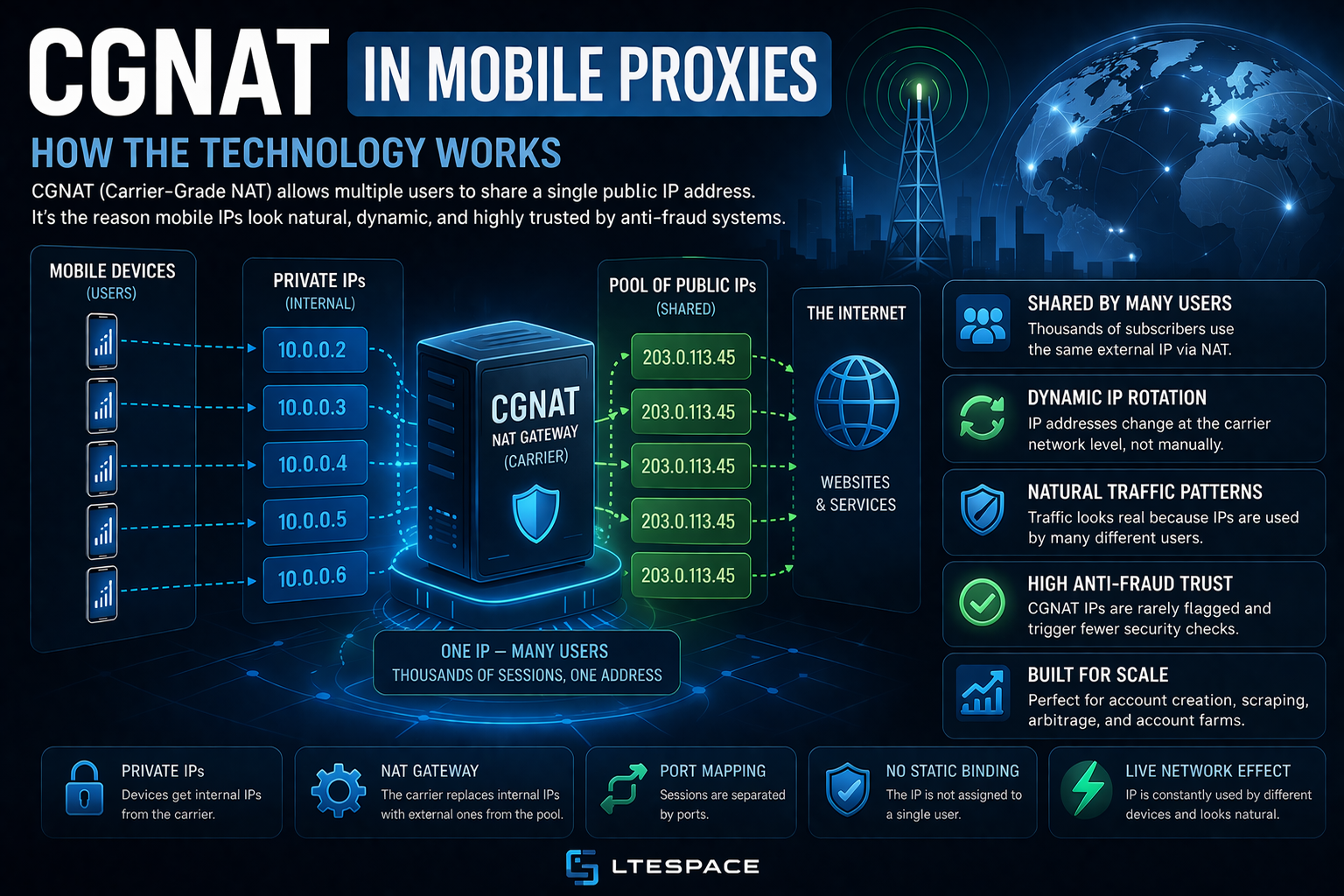
Mobile proxies give an IPv4 address too: a carrier lets its subscribers out to the internet through shared external IPv4 addresses, as explained in CGNAT in mobile proxies. So the question “rotating IPv4 or mobile” really means: datacenter addresses that cycle through a list, or addresses of a mobile carrier.
How rotation works with datacenter IPv4 proxies
The seller owns a pool of addresses in data centres — several bought or leased subnets. The client connects to a single entry point, and the server sends traffic through the next address in the pool on a timer or with every request.
- Neighbouring addresses. The pool’s addresses sit in the same subnets and differ only in the last digits, so a platform sees a stream of requests from one range.
- Shared history. The pool is finite, and other clients have used the same addresses before; some of them end up on blocklists.
- Same ownership. The new address still belongs to a hosting company: rotation changes the digits but does not make the address look like an ordinary user.
How rotation works with mobile proxies
A mobile channel gets its address from the carrier. To change the IP, the modem reconnects to the cellular network and takes a new address from the carrier’s shared pool, the same pool ordinary smartphone subscribers draw from. LTESpace channels change the address:
- on a timer — every 2 or 5 minutes on a shared channel, every 2 minutes on multiregion, and at a chosen interval from 1 to 60 minutes on a private channel;
- by link — on a private channel, whenever you need it;
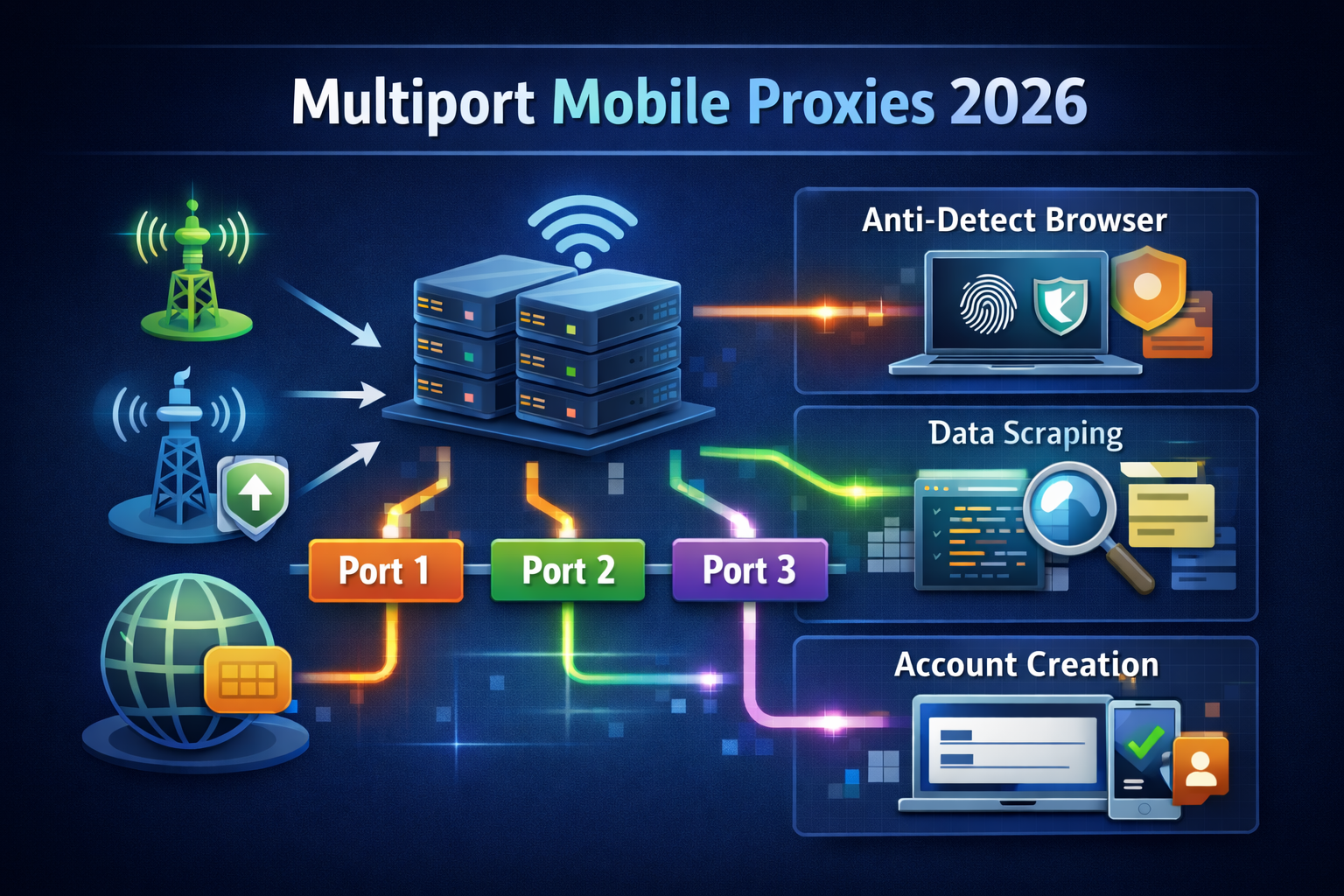
- per connection — with multiport.
Here rotation works in your favour: the carrier’s pool for one channel holds 2,000 addresses or more, subscribers keep reshuffling it, and real people sit behind every address at the same minute. Setup details are in mobile proxies with rotation.
Point-by-point comparison
- Whose address — a hosting company’s for datacenter proxies, a carrier’s for mobile ones;
- How platforms react — a datacenter address more often meets captchas and restrictions, while blocking a mobile one does not pay off, so the platform judges behaviour rather than the address;
- Speed — higher and steadier with datacenter proxies; with mobile ones it depends on network load, and an LTESpace channel gives up to 45 Mbit/s;
- What rotation changes — the digits inside a data centre’s pool for datacenter proxies, the address inside a carrier’s pool full of real subscribers for mobile ones;
- Price — a datacenter address is cheaper, a mobile channel costs more, but LTESpace does not limit its traffic.
A general comparison of the two types, without the focus on rotation, is in mobile and datacenter proxies: the difference.
When rotating datacenter IPv4 proxies are enough
- collecting open data from websites without bot protection;
- monitoring prices and availability where there are no per-address limits;
- downloading large volumes, when speed matters most;
- requests to services that do not care where a visitor comes from.
When you need mobile proxies
- accounts on social networks, marketplaces and ad platforms, where a datacenter address triggers checks;
- search result checks: Google answers datacenter requests with a captcha, see mobile proxies for checking Google results by region;
- collecting data from protected websites — more in proxies for web scraping;
- work from a specific country or region, where the address must match a local carrier, see mobile proxy geography.
How much rotating mobile proxies cost
LTESpace channels in Russia for 30 days, September 2026 prices:
- Shared — ~$8, IP change every 2 or 5 minutes;
- Multiport — ~$8, a new address for every connection;
- Multiregion — ~$11, addresses from different regions, a change every 2 minutes;
- Shared without waiting — ~$16, a change every 2 minutes with no pause in the proxy’s work;
- Private — ~$39, your own interval from 1 to 60 minutes or a change by link.
A channel can be rented from one day, a shared one costs ~$1.6 per day, and a free 2-hour test is available before buying. Other countries and free channels are in the LTESpace plans.
Summary
Rotating IPv4 proxies is a common name that covers both datacenter addresses and mobile carrier addresses. Rotating datacenter IPv4 proxies are cheaper and faster and suit open data. Where a platform checks where an address comes from, rotating datacenter addresses does not help, and you need mobile proxies with a carrier’s IP.