
 English
 Русский
Proxies for website promotion are a working tool for SEO specialists: they show search results, ads and the site itself through the eyes of a user in the right region and let you collect data without being blocked. In 2026 Google results are personalised by country, city and device, so a check from your own computer shows only one version. Proxies from the right location return the honest picture.
Rank tracking by region
A site’s rankings in two cities of the same country can differ by dozens of positions, and between countries the gap is even wider. An SEO specialist checks results through a proxy in each region and sees:
- the real rankings of the pages being promoted;
- which competitors rank higher in a particular city;
- which blocks take the first screen: maps, ads, quick answers;
- how the site’s snippet looks in mobile results.
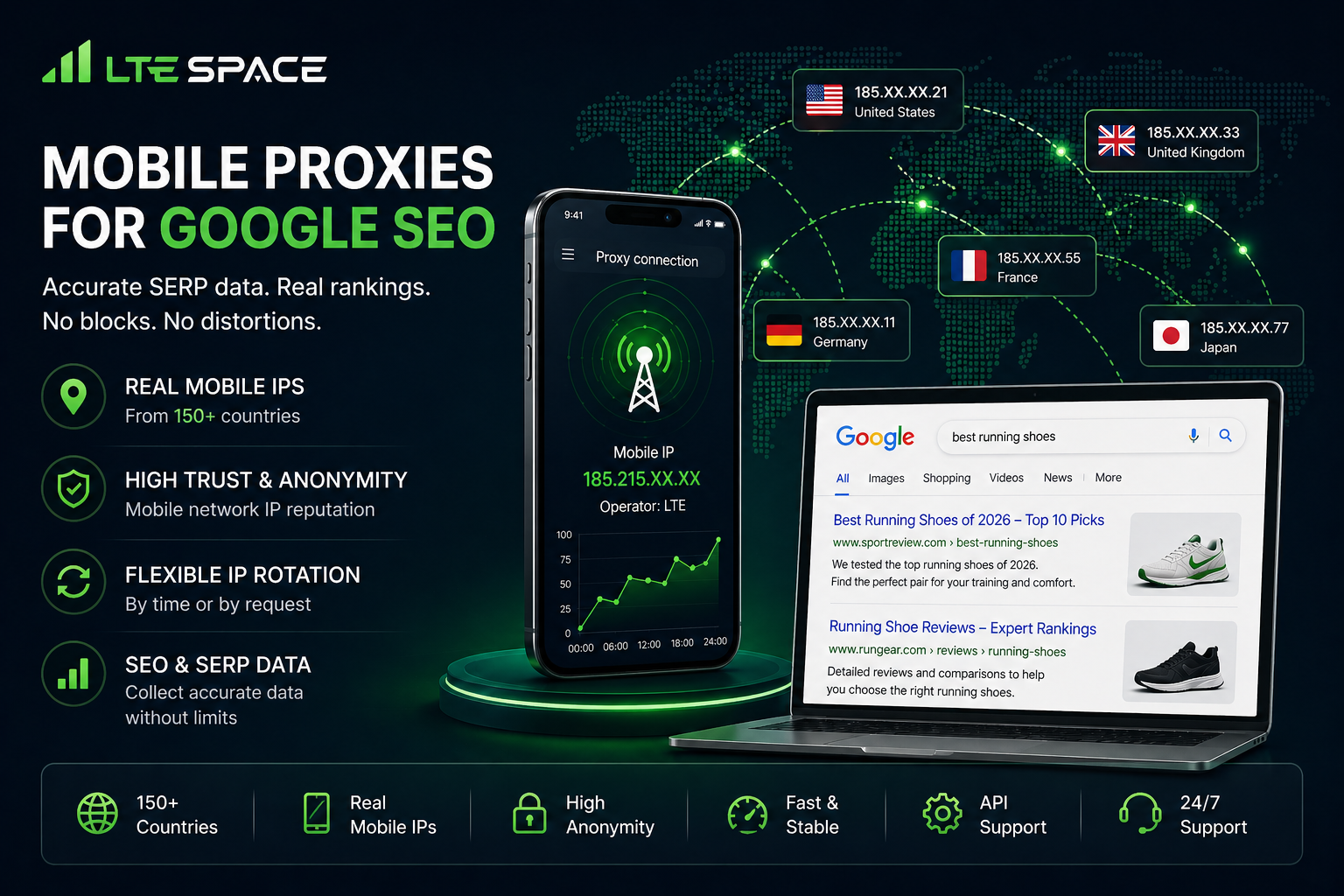
A mobile IP is especially useful here: most searches come from smartphones, and mobile results differ from desktop ones. A detailed guide is in checking Google results by region.
Competitor and ad research
Ads are shown by location, time and device. To see competitors’ ads in another city or country, you need an address from there. Through a proxy you can check:
- ad copy and landing pages;
- competitors’ regional prices and promotions;
- how competitors’ sites differ between countries.
More on checking ads in ad verification proxies.
Keyword and audit data collection
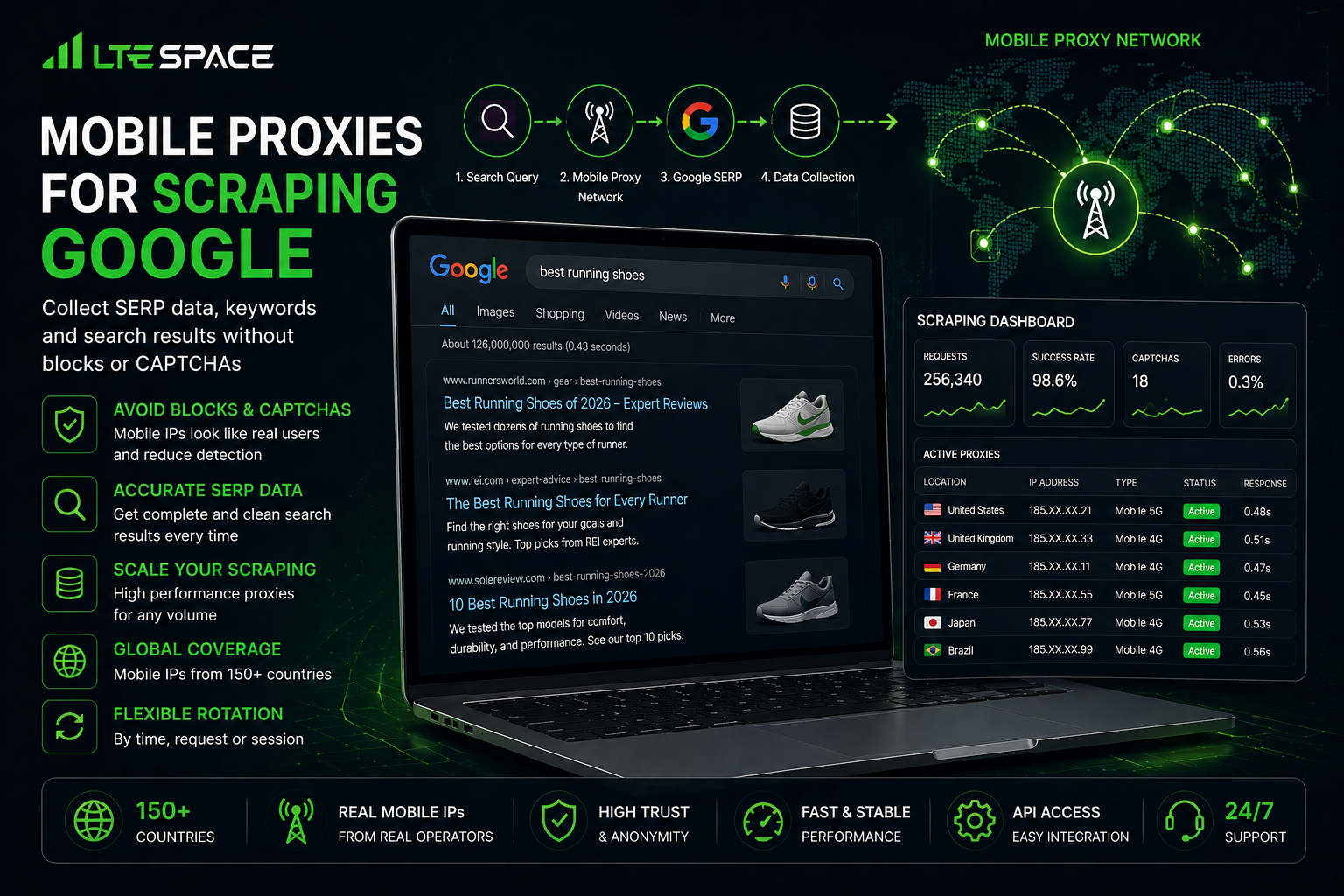
Collecting suggestions, search volumes, results for thousands of queries and data from competitors’ sites is scraping. Search engines quickly limit requests from one address, so collection runs through a pool of proxies with rotation. How to set it up is covered in proxies for web scraping and mobile proxies for scraping Google.
Checking your own site from other regions
Multilingual and regional sites serve different content by IP: language, currency, warehouse, redirects to a local version. Through a proxy from the right country you can check:
- whether the redirect to the regional version works correctly;
- whether the site is reachable on the mobile networks of a given country;
- how fast the site loads for a mobile network user;
- whether the site’s own protection blocks genuine visitors from another country.
What proxies do not do
- they do not speed up the site — load time depends on the server, code and images, not on the SEO specialist’s proxy;
- they do not raise rankings by themselves — proxies provide data, while decisions about content and links are made by people;
- they do not make manipulation safe — fake clicks and artificial behaviour signals break search engine rules, and a new IP does not change that.
Which channel to choose
- for manual checks of results and ads — a private channel in the right country, the address changes by a special link;
- for regular data collection — a shared channel with timer rotation, or multiport for parallel threads on Russian carriers;
- for work across several countries — channels in each of them, see mobile proxy geography.
Summary
Proxies for website promotion let you see search results and ads through the eyes of a user in the right region and collect data without blocks. Rank tracking, competitor research, keyword collection and auditing regional versions are the main use cases. More on working with search in mobile proxies for Google SEO; channels for these tasks are in the LTESpace plans.