
 English
 Русский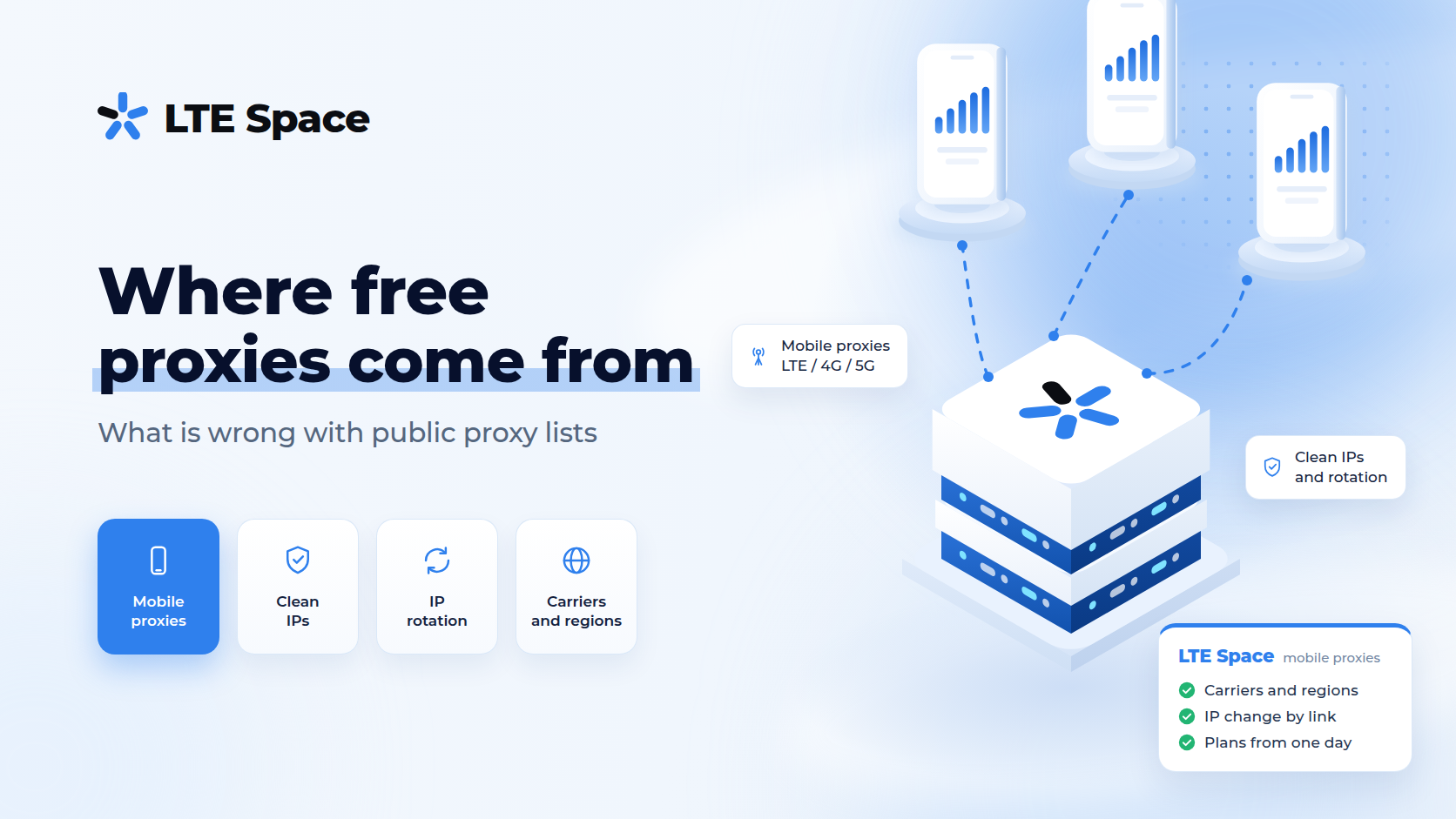
Free proxies are addresses from public lists that anyone can connect to without paying or signing up. Lists with thousands of addresses are easy to find and are updated daily. The real question is who keeps these servers open and why: running a proxy costs money, and if the user does not pay for access, the owner has some other interest.
Where free proxies come from
Most addresses in public lists get there in one of five ways:
- misconfiguration — an administrator set up a proxy for an office or a server and did not protect it with a password. Scanners find such an address within hours, and it ends up in lists without the owner knowing;
- infected devices — routers, cameras and computers running malware that turns them into proxies. Traffic goes through someone else’s device without its owner’s knowledge;
- traps — servers set up on purpose to watch the traffic passing through: logins, cookies, the content of unencrypted pages;
- advertising — services hand out some addresses for free to attract customers and inject their own ads into pages;
- trial access — paid services offer a limited test. This is the only source with a clear owner and clear terms.
Aggregator sites collect addresses from all these sources at once and check only one thing — whether the proxy responds. Who is behind it is not visible in the list.
Why free proxies are risky
- data interception — the proxy owner sees all unencrypted traffic and can inject code into pages without HTTPS;
- stolen access — a login and password entered through someone else’s proxy may end up with the server owner;
- someone else’s history — hundreds of people use the same address at once, including for spam and attacks. Such IPs have long been blacklisted, and platforms block them at the door;
- instability — an address lives from a few minutes to a few days, the speed is low and the connection drops;
- legal risk — traffic through an infected device flows without its owner’s consent.
For account work a free proxy is worse than no proxy at all: the account gets an address with a bad reputation and a link to everyone who used it before. How the reputation of an address affects registration is covered in IP trust score.
Can free proxies be used at all
There is one acceptable scenario: a one-off check of how a public website opens from another country. Even then:
- do not enter logins or passwords;
- open only sites with HTTPS;
- do not route messengers, email or work tools through such a proxy.
For scraping, free proxies are almost useless too: protected sites stop them with captchas, and a noticeable share of any public list is already dead.
Where to get proxies for real work
Paid proxies differ by the source of the address:
- datacenter — cheap and fast, suitable for open data and sites without protection;
- residential — addresses of home internet providers that look like ordinary users;
- mobile — addresses of mobile carriers, which platforms trust the most. The difference from datacenter proxies is explained in mobile vs datacenter proxies.
When choosing a service, check that the proxy is issued with a login and password or an IP whitelist, that the rental period is clear and that the address is not shared with an unknown number of people. A private channel is assigned to one user, a shared channel is used by several clients — the plan states which one you get.
Summary
Free proxies come from misconfigured servers, infected devices, data-collecting traps and advertising giveaways. The user pays for them anyway — with data, account reputation and time. Real work needs a proxy with a known owner and clear terms; mobile channels with rental from one day are in the LTESpace plans.