

 English
 Русский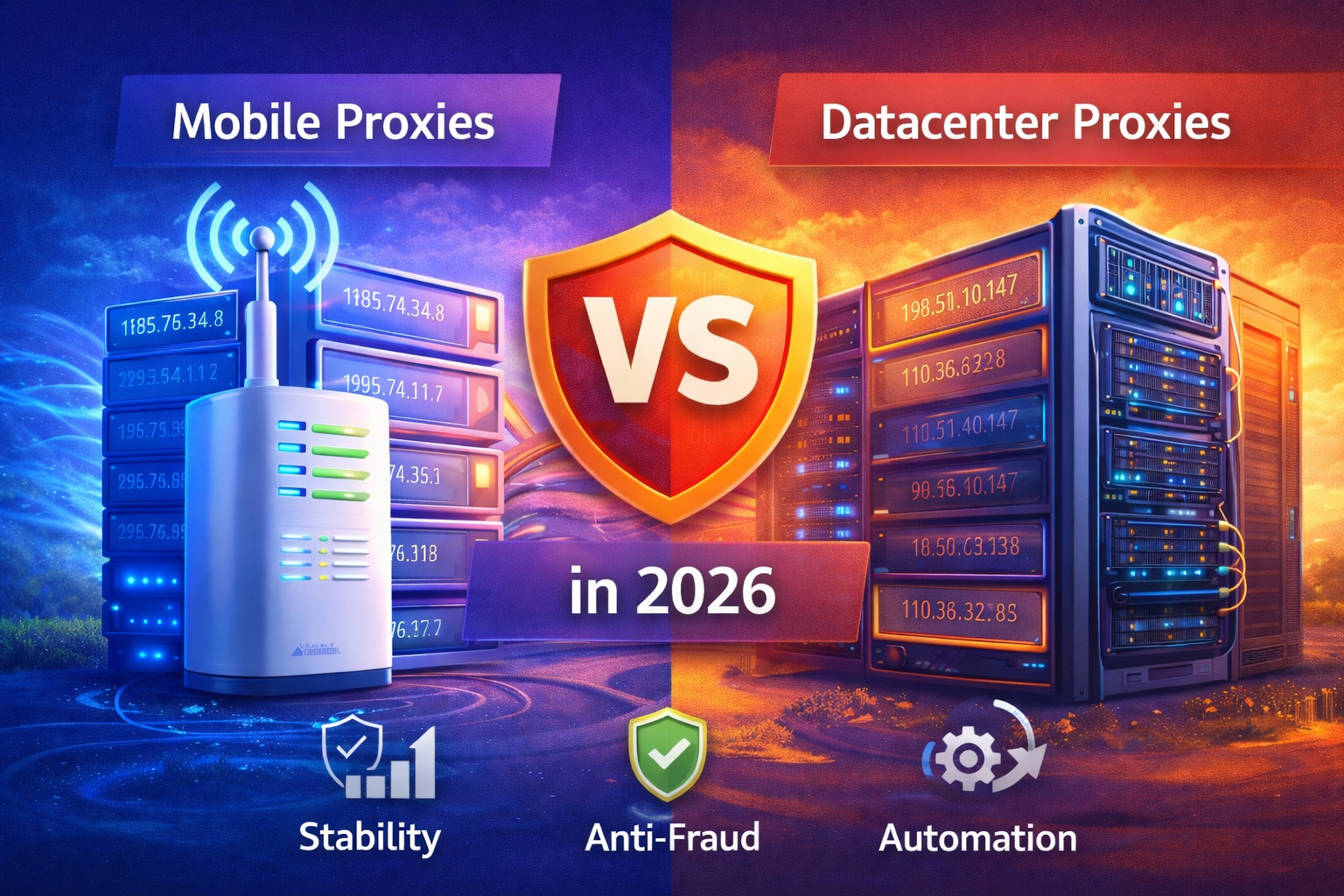
Mobile proxies in 2026 have become a primary tool for web scraping, automation, and account-related tasks. As websites deploy more advanced anti-fraud systems, datacenter proxies are increasingly identified and restricted, while mobile IPs continue to demonstrate higher trust and stability.
How Websites Detect Datacenter Proxies
Datacenter proxies use IP addresses belonging to hosting providers. These IPs share several characteristics that make them easy to detect:
- belonging to hosting or cloud ASNs;
- lack of mobile NAT behavior;
- repetitive traffic patterns across many requests;
- high concentration of automated activity.
As a result, datacenter proxies are more likely to face captchas, rate limits, or full IP bans.
Why Mobile Proxies Look Like Real Users
Mobile proxies operate through real mobile carrier networks and shared NAT pools. From a website’s perspective, this traffic is almost indistinguishable from normal smartphone users.
Key advantages of mobile IPs include:
- one IP shared by many real subscribers;
- natural IP rotation;
- strong reputation of mobile carrier ASNs;
- more tolerant anti-fraud responses.
This is why mobile proxies typically remain usable much longer than server-based alternatives.
Mobile Proxies for Scraping and Automation
When collecting data at scale, websites closely monitor traffic sources. Mobile proxies allow you to:
- scrape data with fewer captchas;
- send more requests per IP pool;
- maintain longer session stability;
- reduce the risk of permanent bans.
For these reasons, mobile IPs are widely considered the most reliable option for automation and scraping workflows. The technical logic behind this trust is explained in How Websites Detect Mobile Proxies and Why They Trust Them.
How IP Geography Affects Blocking
Proxy type is not the only factor that influences success. IP geography plays a major role in access limits, content availability, and anti-fraud sensitivity. Some regions are treated as higher-trust sources, while others face stricter controls.
How proxy location impacts results is подробно explained in Mobile Proxies Geography.
Mobile Proxies and Anti-Fraud Systems in 2026
Modern anti-fraud systems evaluate multiple signals at once:
- network type (mobile vs datacenter);
- behavioral consistency;
- IP rotation patterns;
- regional traffic characteristics.
Mobile proxies combine all these factors more effectively than datacenter solutions. That is why Mobile Proxies and Anti-Fraud in 2026 remain one of the most resilient approaches for working with sensitive platforms and accounts.
Practical Use Cases for Mobile Proxies
In 2026, mobile proxies are used not only for technical tasks but also in commercial scenarios:
- e-commerce and marketplace automation;
- traffic arbitrage;
- account management;
- analytics and monitoring;
- SaaS products and internal tools.
Real-world use cases and monetization models are covered in Earning with Mobile Proxies in 2026.
Summary
Mobile proxies in 2026 clearly outperform datacenter proxies in terms of trust, stability, and longevity. They allow projects to operate longer, safer, and with fewer restrictions—especially in scraping, automation, and anti-fraud-sensitive environments.


